InBody Body Composition Scans for Metabolic & Mitochondrial Health
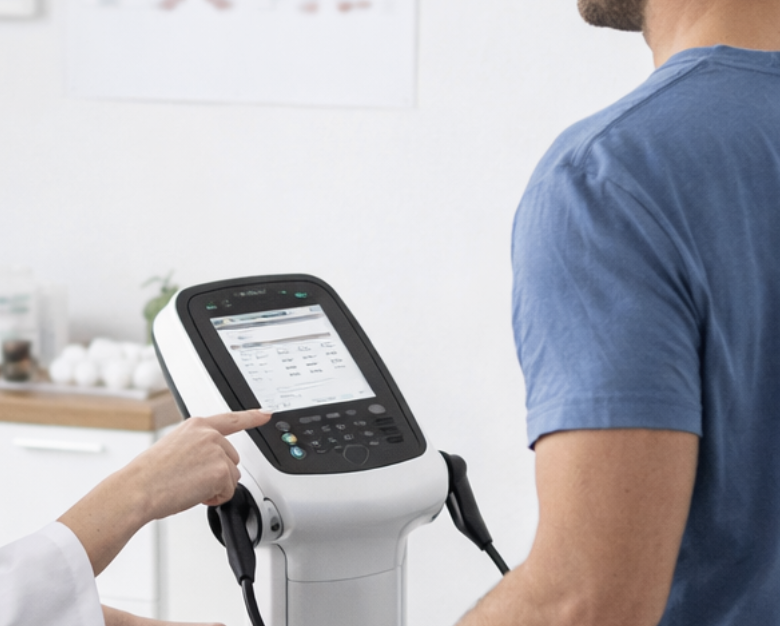
Most people have been taught to track health through weight alone. The scale goes up or down, and conclusions are drawn from there.
In functional medicine, we look deeper.
Body weight alone tells us very little about how well your metabolism is working, how resilient your cells are, or how efficiently your body produces energy. What matters far more is body composition — the balance of muscle, fat, water, and cellular health that drives long-term vitality.
That’s why we’ve introduced InBody body composition analysis at the clinic.
In this article we’ll explain what InBody scans measure, why they matter for long-term health, and how they’re used in care here at FMU. This medical-grade technology gives us a clearer view of metabolic function, muscle quality, hydration patterns, and mitochondrial health, without radiation and in just a few minutes.
What Is an InBody Body Composition Scan?
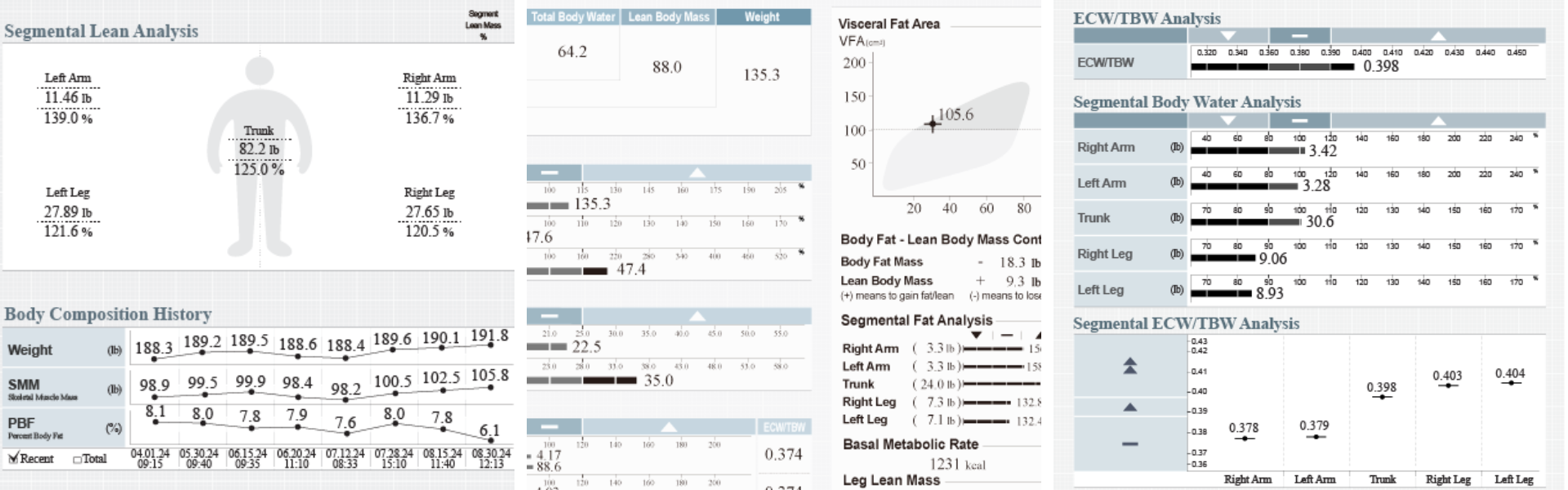
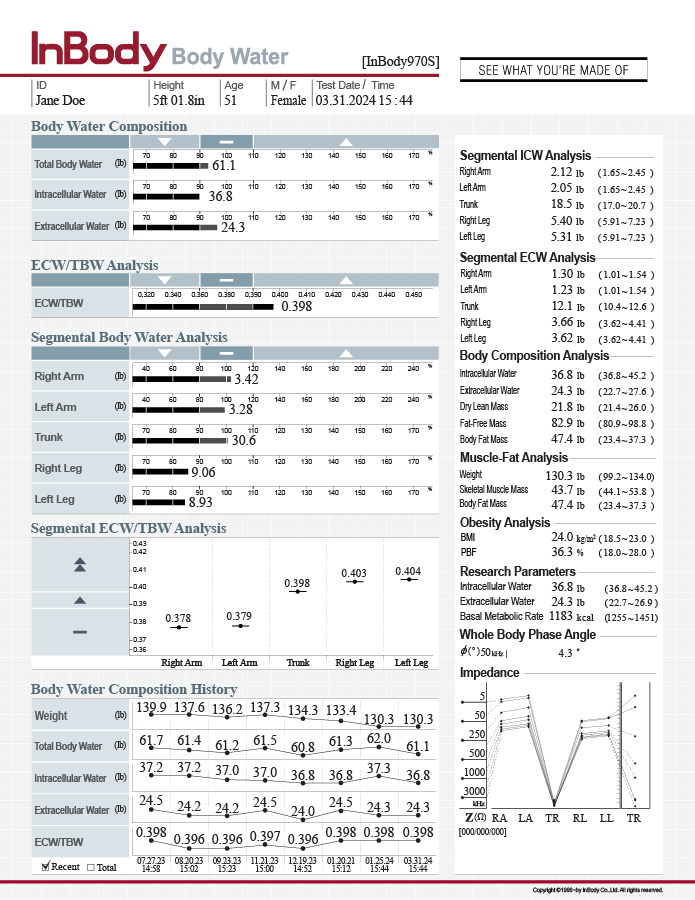
InBody body composition report showing key metrics used in care assessments.
An InBody body composition scan is a multi-frequency bioelectrical impedance analysis (BIA) that measures how your body is structured and functioning beneath the surface.
Instead of focusing on body weight, it provides insight into:
• Skeletal muscle mass (your metabolic engine)
• Body fat percentage and visceral fat levels
• Intracellular vs extracellular water (hydration & inflammation patterns)
• Phase angle (a marker of cellular integrity and resilience)
• Segmental muscle balance and tissue quality
Together, these give us a real-time snapshot of how your body is functioning at the cellular and metabolic level.
Why Body Composition Matters More Than Weight
When it comes to metabolic health, hormone balance, and aging, body composition is a stronger predictor of outcomes than body weight alone.
Two people can weigh the same and have completely different health outcomes.
What drives insulin sensitivity, hormone balance, inflammation, energy production, and aging is not the scale, but:
Muscle quality + mitochondrial function + fat distribution + cellular hydration
Loss of muscle and accumulation of visceral fat are strongly linked to:
• Insulin resistance
• Chronic fatigue
• Hormonal dysregulation
• Inflammation
• Cardiometabolic disease
• Accelerated aging
By tracking these markers directly, we can intervene earlier — long before disease shows up on conventional lab work.
Curious how metabolic balance influences blood sugar and long-term health? You may find our article on optimal blood sugar management helpful, which outlines a functional medicine approach that works with your body.
Mitochondria: The Foundation of Energy, Metabolism, and Aging
When we talk about metabolism, energy, and long-term health, we are really talking about mitochondria.
Mitochondria are tiny structures inside your cells that convert nutrients into usable energy. This energy fuels everything from muscle contraction and hormone signaling to brain function, immune balance, and tissue repair. When mitochondria function well, the body adapts efficiently to stress and maintains resilience over time. When they do not, symptoms often appear long before disease is identified.
Low energy, poor exercise tolerance, brain fog, blood sugar instability, chronic inflammation, and faster biological aging are all closely linked to mitochondrial health.
Mitochondrial geneticist Dr. Douglas Wallace helped establish what we now understand as mitochondrial medicine. His work has shown that dysfunction at the mitochondrial level plays a central role in many chronic conditions.
“Mitochondrial dysfunction is central to the majority of chronic degenerative diseases, including diabetes, cardiovascular disease, neurodegeneration, and aging itself.”
This understanding changes how we approach care. Rather than managing symptoms in isolation, functional medicine focuses on supporting the systems that regulate energy production and cellular resilience at the root.
Your mitochondria regulate:
• How efficiently you produce energy
• How you burn fat and glucose
• Inflammatory balance
• Muscle maintenance
• Stress resilience
• Rate of aging
Because muscle tissue is one of the most mitochondria-dense tissues in the body, tracking muscle health gives us a powerful window into mitochondrial performance.
Cellular Energy, Charge, and Redox Balance
At the cellular level, health depends on how efficiently energy moves through your system and how well your cells maintain electrical charge.
From a biophysics perspective, mitochondria do more than produce ATP. They help maintain electrical balance within cells, allowing tissues to repair, adapt, and function smoothly over time.
Your mitochondria generate and maintain electrical potential within cells, which allows:
• Nutrients to convert into usable energy
• Cells to communicate effectively
• Inflammation to resolve
• Tissues to repair and regenerate
This process is governed by cellular redox balance, which refers to the continuous flow of electrons through mitochondrial pathways that support energy production and cellular stability.
Healthy mitochondria = strong cellular charge = efficient energy + low inflammation
When redox balance becomes impaired, we commonly see patterns such as:
• Persistent fatigue and brain fog
• Poor fat burning and blood sugar instability
• Loss of muscle quality
• Chronic inflammation
• Faster biological aging
Bioelectric Signaling and Healing in the Human Body
Before we look at metrics, it helps to understand how cells use energy and charge to organize healing at a fundamental level.
Groundbreaking research in developmental biology and regenerative medicine has shown that cells communicate through more than chemical signals and genetic instructions.
Developmental biologist Dr. Michael Levin has shown that cells also communicate through electrical charge and voltage patterns. These bioelectric signals help organize tissue repair, inflammation control, regeneration, and disease behaviour at a foundational level.
Similarly, orthopedic surgeon Dr. Robert Becker demonstrated that the body uses direct electrical currents to guide wound healing and bone regeneration. His work helped establish bioelectric signaling as a core regulatory system in human physiology.
Mitochondria sit at the center of this process.
They generate membrane potential and electron flow that allow cells to hold charge, maintain structural organization, and function efficiently. When mitochondrial energy production is strong, tissues maintain healthy bioelectric signaling and coordination.
When mitochondrial function declines, electrical coherence weakens. This breakdown is associated with inflammation, tissue degeneration, and chronic disease patterns.
Technologies like InBody are clinically useful because different tissues conduct electricity based on cellular integrity, hydration status, and metabolic health. This gives us a practical window into the body’s bioelectric organization and mitochondrial function.
This is why bioelectrical measurements offer meaningful insight into tissue health and why InBody data can reflect changes long before symptoms appear.
What InBody Metrics Tell Us About Cellular and Mitochondrial Health
InBody provides objective data that reflects how well your cells and mitochondria are functioning beneath the surface.
Several InBody metrics offer insight into mitochondrial performance and bioelectric health:
Skeletal muscle mass → mitochondrial density and metabolic capacity
Intracellular water → cellular energy production and tissue vitality
Phase angle → cell membrane integrity, charge, and resilience
Visceral fat → metabolic dysfunction and insulin resistance
As mitochondrial function improves, we typically see:
✔ Increased muscle quality
✔ Improved cellular hydration
✔ Rising phase angle
✔ Reduced visceral fat
✔ Improved metabolic flexibility
This makes InBody a powerful objective tool for tracking true healing, rather than relying on weight alone.
InBody vs DEXA: Comparing Body Composition Testing Options
DEXA scans are often considered the medical gold standard for body composition testing. They directly image fat mass, lean tissue, and bone density using low-dose X-ray technology.
Research shows that modern multi-frequency InBody devices correlate very closely with DEXA across key measurements such as percent body fat and fat-free mass, with some studies reporting correlations as high as 98-99% under controlled conditions.
While DEXA remains slightly more precise for absolute measurements, InBody offers several important advantages. It is radiation-free, quick, and well suited for frequent tracking. This allows us to monitor real changes in metabolic and mitochondrial health over time, rather than relying on occasional snapshot testing.
How We Use InBody Scans in Your Care
InBody scans allow us to track meaningful changes in your health with objective data, rather than relying on symptoms or weight alone.
We integrate body composition tracking to:
• Monitor metabolic improvements objectively
• Track muscle gain during healing phases
• Identify inflammatory fluid shifts
• Assess cellular health through phase angle
• Personalize nutrition, fasting, exercise, light exposure, and supplement strategies
• Measure mitochondrial progress over time
This approach is especially valuable for individuals working on:
Gut health, fatigue, hormone balance, insulin resistance, weight resistance, chronic inflammation, and long-term metabolic and longevity goals.
By combining InBody data with functional lab work, clinical history, and personalized care plans, we are able to adjust strategies with precision and support steady, sustainable progress.
If gut health is a central focus of your care, you may also find our article on gut health from a functional medicine perspective helpful, where we explore how digestion, inflammation, and metabolism are deeply connected.
Healthspan, Not Just Lifespan
Our goal isn’t simply to add years to life, it’s to add energy, strength, and resilience to those years.
Mitochondria organize how well your body:
• Produces energy
• Repairs tissues
• Regains balance after stress
• Ages over time
And InBody allows us to track and optimize these systems with precision.
FAQ: Common Questions About InBody Body Composition Scans
-
Most people benefit from scans every 4 to 8 weeks, depending on their goals. This timing works well when scans are used alongside care with your ND or functional medicine doctor, as well as in coordination with osteopathy or massage therapy. It allows us to track changes in muscle mass, hydration, and metabolic markers as your body responds to treatment and care plans over time.
-
Yes. InBody scans are considered safe, non-invasive, and painless for most individuals. The technology uses very low-level electrical currents through bioelectrical impedance analysis and does not involve radiation. InBody scans are not recommended for individuals with pacemakers, defibrillators, or other implanted electronic medical devices. If you have specific medical considerations, we can help determine whether this tool is appropriate for you.
-
A scale only measures total body weight. InBody shows how that weight is distributed and how your body is functioning beneath the surface. This includes muscle mass, visceral fat, hydration status, and cellular health markers like phase angle. These insights are far more useful for understanding metabolism, energy, and long-term health than weight alone.
-
InBody data is interpreted in context with your clinical history, symptoms, functional lab work, and treatment plan. It helps guide decisions around nutrition, movement, fasting strategies, supplements, and recovery, allowing care to be adjusted with greater precision over time.
Interested in an InBody Scan?
If you have questions about InBody body composition testing or would like to include a scan as part of your care, our team is happy to help.
InBody scans can be booked as a standalone service or alongside your next visit, and are often integrated into ongoing care with our NDs, functional medicine doctors, and manual therapy practitioners.
Disclaimer: This article is for educational purposes only and is not intended to replace individualized medical advice. Please consult your healthcare provider with any questions related to your health or a medical condition.